Everyone loves the bright yellow American Goldfinch, right? They molt twice a year, unlike most birds, so the outstanding male changes from sunshine yellow to a dull greenish-yellow, just like the female, for the winter months. That's why it seems that they've all gone away, although they stick around Kentucky all year.
I used to put out a separate feeder filled with nyger thistle for them, but they would never eat it. I even bought a new feeder and new thistle, thinking it had gone bad, but they still ignored it. They do enjoy sunflower seeds though.
I've seen a great increase in Goldfinches in our yard since we started planting zinnias and native wildflowers though. Goldfinches are seed eaters, of course. Most seed eating birds will also catch insects for their chicks, to give them extra protein and perhaps calcium. Goldfinches, however, have adapted to a completely vegetarian diet, feeding only seeds to their chicks. They also nest latter in the summer, when a good supply of seeds are available. If a Cowbird lays her egg in their nest, the chick doesn't live long because it can't survive on a diet of only seeds.
I love watching them sway on the zinnia stems in the wind, as they pull off the petals to reach the tiny little zinnia seeds at the base of the flower. The little yellow ring at the top is the true flower of zinnias, and grows higher as the season progresses, leaving seeds at the bottom.
They also like the tiny seeds in black-eyed Susans, coneflowers, bee balm, and cup plants, so I don't dead head these plants when they finish blooming.
Although they aren't native plants, zinnias are quickly becoming one of my favorite flowers. They are brightly colored, and attract colorful birds and insects. Even Hummingbirds come to drink the nectar from them, which really surprised me, since they don't have the traditional long neck I expect hummers to favor.
I subscribe to the 4 F's of bird
photography; Find 'em and Focus
Fast before they Fly away!
Showing posts with label birds. Show all posts
Sunday, August 03, 2014
Thursday, February 21, 2013
Winter Birding Close to Home
Guess I didn't get enough birding in Florida last week, since I went out again here at home. Several people from our bird club have seen a White-winged Scoter on the Ohio River, which is a life bird for me. According to the field guide, this sea duck should be wintering along the coast or the Great Lakes. This lone female must have gotten blown out of her territory by one of the recent winter storms. The Overlook is also home to domestic geese and ducks, and some pretty strange looking hybrids. My favorite is the tuxedo duck - a cross between white domestics and wild Mallards.
Nearby Perrin Park is a nice neighborhood park, which hosts some surprising birds sometimes, and is always worth a quick visit. Canada Geese are the dominant species every day, but this time I found three little Ross's Geese paddling around with the big guys, and one solitary male Hooded Merganser. I've never seen Northern Shovelers paddling around in circles with their heads under water before!
Visitors must be few and far between at the feeding station. I walked there for another look, and got absolutely mobbed by geese and ducks looking for a handout! If a child had been with me, I would have picked it up and run away! I was surprised that all the geese were wearing leg tags.
One goose tugged on my heartstrings though. She obviously had a broken wing and could not fly. She followed me around the platform begging for food. If she can't find it on the ground or in the lake, she must go hungry since she can't fly to another source of food.
Although it still plenty cold to me this afternoon, if Sandhills are starting back north, other winter visitors will be leaving soon as well. So I thought it would be a good time to head out to Shelby County, KY, to check on the Short-eared Owls there. Arriving about 45 minutes before sunset is usually a good time to find them, and 3-4 were flying low over the fields. Some of these photos are a little clearer than the first time, but are still fuzzy due to the distance. The house down the road has SEOs sitting on fence posts in their back yard. I may try this location one more time, and knock on their door to ask if I can use their yard. I bet they don't even know about these beautiful birds!
Friday, February 15, 2013
If You Build It...
Today we "discovered" a wonderful new place to bird in Central Florida - the Orlando Wetlands Park. This is actually a water treatment mitigation area, operated by the City of Orlando to complete treatment of waste water. We always have good birding at water treatment facilities, and this was no exception. The day started cold and dreary - even with a sweatshirt on, I wished I'd brought my gloves. We rushed to the park to take a guided tram ride led by two volunteers, and accompanied by two other birders carrying big scopes. This was our big opportunity to see more unusual birds which we probably wouldn't have found on our own, as they were clear at the back of the property.
"If you build it, they will come..." the birds, I mean. In 1986, this whole area was a cattle farm, which was purchased by the city. Reclaimed water from the sewage system takes 40 days to run through this man-made marsh system, which removes the remaining nitrates and contaminants. The reclaimed water flows first into the cells with the deep marsh habitat, which consists primarily of monocultures with either cattails or giant bulrush. Afterwards, the flow is routed through the mixed marsh and wet prairie cells containing thick growths of pickeralweed, duck potato and other aquatic shrubs. These areas are favored by the wading birds and migratory waterfowl. The final habitat in the wetland system is the hardwood swamp. Cypress, popash, tupelo and water hickories dominate within these cells. However, due to the constant high water levels, the trees have stunted growth and this habitat typically mirrors the deep marsh areas. A 100 acre lake is part of the central and southern flow paths through the wetland system. At least 17 million gallons of clean water is released into the St. John's River every day!
Many of the places we visited this week lacked the larger wading birds we so enjoy when we come to Florida, but the Orlando Wetlands certainly made up the difference today! At Green Cay in Palm Beach County, we saw one Limpkin and felt lucky. Today, we must have seen ten or more.
Our next target bird was the Vermilion Flycatcher. Our tram driver-volunteer has an unblemished record of finding this bright red bird wearing a Zorro mask each trip he makes to the back areas. As we left this afternoon, he told us they had found more, including females and young, so these small Flycatchers have several breeding families.
In Florida, when they say "hawk," they really mean Red-shouldered Hawk, since Red Tails are few and far between. Palm trees from the old pasture land have died, leaving just clusters of trunks without fronds throughout the lakes. Such natural perches are the favorites of Red-shouldered Hawks. Two of them were in love, and couldn't wait for a secluded place for a little romance!
White-billed American Coots and red-billed Moorhens shared the shallow water without difficulty, clucking all day long. However, we searched for the elusive Purple Gallinule, and found a dozen or more - another first for Dick and me! Look at his long yellow feet as he walks across the tops of the lily pads! The candy corn colors on the beak always stand out, even if the light isn't good for seeing purple feathers. We heard quite a few King Rails, but it would have been asking too much for them to come into view from the bull rushes.
Anhingas are beautiful black and white birds. During breeding season their nares turn bright blue. What a handsome lad this one is! They dive for fish, and then stand with their wings spread to dry since they have no oil on their feathers as other birds do.
Cormorants have a slightly hooked beak, and catch fish between the top and bottom mandibles, toss it up and swallow it head first. The Anhinga, on the other had, has a perfectly straight beak which they use to spear their fish! This is the first time I've ever seen this behavior. Of course, then the problem is getting it off the beak and into the throat. This fish is obviously much bigger than the birds throat and we watched to see how he would handle the situation. We thought the fish must surely be dead, having been out of the water so long, but in a flash it ended up back in the water, and the Anhinga planned another fishing trip.
Normally, you envision an Ibis to be white, with startlingly red beak and legs...
... but the dark Glossy Ibis is also beautiful...
The endangered Wood Stork shared a rookery with Ibis and Egrets of all sorts.
There is actually a separate subspecies of Sandhill Cranes in Florida, where it is protected, and if killed, carries a very high monetary penalty. This subspecies is under protection of state and federal law at this time. Since the loss of habitat is a somewhat controllable cause of a declining population, habitat preservation is a valuable management measure. The current outlook for the Florida sandhill crane, if it can be maintained on the protected habitats, is good.
It's not hard to tell these large birds apart when in flight. The Great Blue Heron, Great Egret and Snowy Egret fly with necks tucked in an "S" shape. Wood Storks, Ibis, and Sandhill Cranes fly with necks out-stretched.
Well, I could probably go on, after our thrilling day, but it's getting late and Dick wants to use the computer, so I'd better close for now. Only one more day of birding, then it's time to head home in the Big Bird in the Sky!
Monday, February 11, 2013
Return to Merritt Island NWR
In 2006 we visited Merritt Island NWR for the first time, and became hooked on birding. It was like celebrating an anniversary to return there today, since we know so many more birds now. We first saw Northern Shovelers on that trip, and thought they had black heads. The field guide didn't have any black headed ducks. When they turned in the light, we found their heads to be dark green. We didn't know then to look at their enormous bills instead! These three males are NOT sitting on each other's shoulders, although it does look that way.

Apparently Blogger is having some issues - they are not uploading my photos in a timely fashion, and I'm getting rather frustrated. Grrr! Anyway, I love all raptors, but Ospreys are about my favorite. See how he's carrying the fish so it faces forward? Very aerodynamic!
I have LOTS more photos, but am too tired to fool around with it. So here's a video of a Tri-color Heron fishing. The good photos are on Picasa at https://picasaweb.google.com/107775610888368954222/MerrittIslandNWRFlorida2013#, so please give it a look! More later...
Sunday, July 22, 2012
Water Meadows
What a summer! Extreme temperatures, topped by medical maladies for both Dick and I, have made this a not-so-fun year. From day to day, we don't know if we'll be able to get up and move around without discomfort and downright excruciating hip pain, so that we've both had to (gasp!) cancel some of our volunteer activities. Needless to say, we are both incredibly frustrated by the whole thing. Today, however, we were up to a short birding excursion at Hays Kennedy Park in nearby Prospect, KY.
The park has a long shallow pool of water which is habitat for dragonflies and shorebirds of different sorts. We were surprised to find any water in it at all today, given the drought and heat this summer. But the mudflats were being explored by noisy Killdeer. As anyone walked along the edge, they would call out ki-de, ki-de, ki-de, and fly off....
...circle around a few times, then settle back on the mud.
I've always admitted to difficulty identifying different shore birds, other than Killdeer. We saw some that were much smaller than the Killdeer, and they seem to have black bills and legs, just like the Sanderlings we see at the beach. Do we have Sanderlings in Kentucky, or are these some other kind of small shorebird?
Raptor Rehab has been releasing many of the birds that came in as chicks in the last few months, and today, we released a young Peregrine Falcon at Hays Kennedy Park, which was the real reason we went out in the middle of the hot afternoon. This young bird has already been banded, and a group of volunteers and raptor lovers attended this wonderful occasion.
These releases are the reason we volunteer in the first place!
Our son is getting married next month, so Dick decided this would be a good time to have our hardwood floors refinished. So in the midst of medical problems, he was cleaning out all the display cabinets. I wasn't really convinced it had to be done, until I saw the difference between exposed flooring and that under the carpet. Yeah, this is a good idea, but we haven't emptied these rooms since we moved in almost 34 years ago!
Saturday, June 23, 2012
Birdy, Birdy
![]() |
| Turkey Vultures |
The last few days have been pretty birdy for me. Thursday evening the volunteers at the Falls of the Ohio met for a sunset get-together. As the temperatures dropped, it became very pleasant. Of course, I was busy trying convince everyone of the virtues of vultures! As they soared overhead, two Turkey Vultures gave a demonstration of precision formation flying vulture-style. Those great big wings never run into the next bird.
![]() |
| Kettle of Circling Vultures |
Large groups of both Turkey and Black Vultures circled around. Maybe they were hunting for supper, and maybe they were just looking for a good roosting spot for the night. The trees lining the Ohio River at the Falls may host up to 25-30 vultures each for the night. Who needs Motel 6? The guys with good spotting scopes also found a Snowy Egret fishing in the shallow water, while both of our Bald Eagles perched on the dam. My eagle expert friends say you can't see the nest at all now for all the leaves, but earlier they found 2 eaglets, which should be ready to fledge any day now. We'll have to keep an eye out for all dark eagles who don't quite have the knack of flying yet.
![]() |
| Kentucky Warbler |
Today we joined the Beckham Bird Club for a trip to Jefferson Memorial Forest. Dick volunteers there all the time, but seldom has an opportunity to go birding. Barbara is especially good at knowing her bird calls, which is important under the forest canopy. We were delighted with the warblers we saw/heard today, including this little Kentucky Warbler, who finally came out of hiding. The Hooded Warbler was shy and did not leave the bushes to greet us.
![]() |
| Common Yellowthroat |
A Common Yellowthroat (another warbler) hopped out to give us the eye when we played his call. Who's that in MY territory? he seemed to be saying. A yellow Pine Warbler lived up to his name, warbling from the pine trees, but too far away for a photo.
![]() |
| Worm-eating Warbler |
Most exciting though, was finding two birds to add to my life list. At first I thought this Worm-eating Warbler was a Carolina Wren, since I just got a glimpse of him among the dead leaves where he hunted for, you guessed it, worms. Lots of warblers eat worms and caterpillars. I wonder how this one got stuck with the name? I didn't get a photo myself, and borrowed this one from the Internet. Closer examination (a challenging task given the unceasing activity of this bird) shows that he has lots of stripes on his head. He jumped around our position, calling and searching in the dead leaves for about 5-10 minutes -- a terrific performance for our morning.
![]() |
| Summer Tanager |
The triumph for me was actually seeing this Summer Tanager. I've often heard this distinctive picky-tucky-tuck call in the forest, but never could track it down. This one sat in the relative open of a nearby tree, waiting patiently for me to take as many photos as I could. The Birding By Ear CD says this bird sounds like a robin that has taken voice lessons. It's cousin the Scarlet Tanager has black wings, and sings like a robin with a sore throat. The field guide says the Summer Tanager is a more southern bird. Anyway, I've been trying to find one for years, and was delighted to increase my life list today! Keep seeking, and eventually ye shall find!
Sunday, April 29, 2012
Natural Bridge, Natural Wildflowers
and showy orchis within 3-4 feet of the pathway.
The pink Lady's slipper was much more elusive though, and we risked tripping on roots and rocks in the path to scan both sides of the hill for them.
Typically, I envision orchids as large and elaborate, the big flower you wear at the prom. But many orchids are small and inconspicuous, if not downright invisible! This spring coralroot is an orchid, and the closer I stood to get a photo of the minute blossoms, the harder it was to focus.
The birds sang all day, from Carolina Wrens who sounded like they were using amplifiers, to three little Ruby-throated Hummingbirds dive bombing each other at the feeder. I often thought the same Hooded Warbler was following us around, since we heard one no matter where we hiked, along with many other unseen warblers. If I hadn't studied bird song for many years, I could only have claimed 5 or 6 species actually seen. But then a larger bird flew through the trees and sat where I could find it in the binoculars. The most wonderful Wood Thrush just sat and posed for at least 5 minutes! All his relatives or rivals had serenaded us, but this one came out to take a bow!
He showed each profile, then turned so we could see his warm cinnamon brown back and pink legs. This bird certainly made up for all my disappointment with the other birds that stayed in hiding!
Each of the Kentucky State Parks has a dining room with a view, and they hang bird feeders by the windows for the entertainment of the diners. As always, the gray squirrels show off their acrobatics chasing each other up and down the trees, jumping on the feeders, and hogging all the seed. We met a couple who have attended 30 of these wildflower weekends at Natural Bridge and they gave us a tip. "Come back this evening, when the dining room is closed and darkened," they said. "The flying squirrels come then to get their share of the sunflower seeds." We gingerly shined a flashlight to be sure they were present, and the small noctural squirrels weren't disturbed at all. I got brave and turned on my camera flash, and that didn't bother them either, so I got some marvelous photos of their shining eyes and sleek skin folds they use to fly! Every few minutes, you would see a faint glimpse of something in the air - another flying squirrel. I've never seen them in the wild before, so it was truly exciting, and I passed the tip along to a little girl in the lobby the next day. Hope she was able to see some.
Thursday, April 05, 2012
Bird Moms
![]() |
| Mallard Duck Neting in Flower Bed |
![]() |
| Robin Nest |
![]() |
| Tree Swallow Nest |
![]() |
| Chickadee on Nest |
![]() |
| Barn Swallow |
![]() |
| Bald Eagle on Nest in Snow |
![]() |
| Osprey Turning Eggs |
![]() |
| Feed Me NOW! |
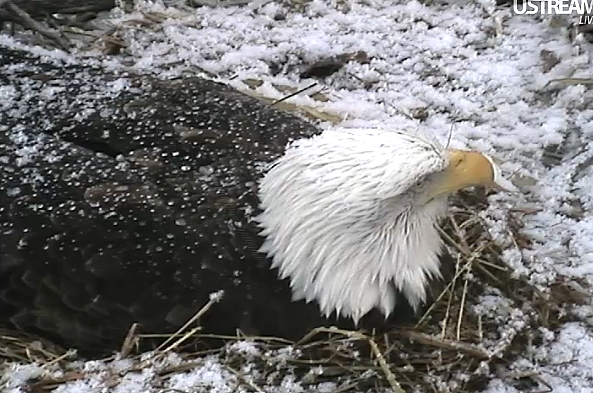
This is a busy time of year for all the birds, and we can help them by providing nesting materials, water, and a safe quiet place to nest. If you have cats, keep them indoors. If you don't find any nests in your yard, that's just the way the birds want it. But you can watch all kinds of birds with online nest cams, Eagles, Hawks, Owls, Great Blue Herons, you name it. One way to keep up to date is with http://www.facebook.com/nestcams. Cornell Unviversity has several live cams as well at http://watch.birds.cornell.edu/nestcams/camera/index, and there are many more. Be careful though. Watching nest cams is like watching soap operas. You can become addicted to the feathered drama each day, but what a wonderful way for people to become interested in birds!
Subscribe to:
Posts (Atom)